

11·
1 month agoSo:
- They had nuclear records
- They expose the server to the Internet
- They don’t update their software since 2023
What the hell did they expect?
So:
What the hell did they expect?
Cute, even if deeply impractical for most server applications.
We need more of those weird enthusiast projects around, and we need to hear of them.
Still, going all green and then selling sets of four physical books is a little odd.
After using Proxmox for a while, I swear by LXC, at least the way it is provided there.
Makes containerization make sense without all the pain.
Disclaimer: not even an IT guy, so can be gravely mistaken, just want to own my stuff.
selfhosted use Discord
Lol
Discord absolutely failed them They consider starting another Discord server
Double lol
Good bot
Absolutely. I don’t have a leader, but I do have you and others by my side.
Fuck the war. Fuck the so-called “leaders”
Daily life…it depends. Overall, things as running as usual, except for some things that cause everyone’s anxiety.
First is, obviously, heavy Internet censorship. Living without a VPN is so unbearable even older generations call the younger one for help. Government is currently high on pushing the state-controlled messenger Max, but no one, even the older folks, wanna join. So, they do everything in their power, from forcing government services to use Max as a communications platform, to blocking all other options. People keep using Telegram regardless, and find ways not only around blacklist, but even whitelist blocking. Max is nearly universally despised. VK remains a not-much-better alternative for those who didn’t yet find their way around whitelists. Unease grows about plans to use state-controlled apps to monitor VPN connections on Android phones and block respective IPs. iPhones are better protected in this respect, but other plans are devised as well.
Second is war. The last 2-3 years of it were relatively chill for most Russians, but with drone strikes appearing as far as Saint Petersburg, the war knocks back home. The unease is amplified by Russia turning mobile connections to whitelist mode when drones appear. The appearance of circumvention methods (bridging through whitelisted resources into the wider Internet), on one hand, relieves the anxieties of losing last bits of access to the world, but on the other, shows governments inefficiency at maintaining the drone defense.
Third is more broad and globally known - the cost of living crisis, which hits here just as everywhere else. Housing is practically unattainable for most, and rent goes through the roof. Food gets more expensive, and scandals arise about managing the existing supply, such as Miratorg claimed to push government’s hand in exterminating private farms’ livestock under the guise of disease prevention.
Overall, plenty of room for anxiety and sense of instability.
The Putin support has long switched from “go go Putin” to “who, if not Putin?” and then to “if Putin loses, the country is going to collapse”. So, over time it became less of actual support and more of added anxiety about war’s resolution and what it means for Russia going forward. Putin is often seen as a beacon of some, fainting, stability. But even with all that, support does indeed fade.
As someone living in Russia, it indeed works to trick complex DPI systems. Unlike classic Wireguard, it works.
Alternatively, you can download Amnezia VPN client app on your phone or PC, and it has this amazing function where you provide the IP and root credentials, and it installs server software automatically.
Obviously, only use it when you don’t have other things running on your server.
Advantages:
Disadvantages:

Sure, but it is way more convenient for many to tap the phone, and when there’s demand, there must be the supply.
After all, making privacy and security convenient is the number 1 issue in the adoption of good practices by regular users.
I think it’s rather about NFC-powered (i.e. “tap your phone”) payments. These are automatic, which comes with different security issues.
No worries, answer anytime :)
Since LXC works on top of the Linux kernel, anything that works with it can be easily used as an image. For example, you can just throw any distribution .iso into it, and it will handle it as a container image. Proxmox does all the interim magic.
Say, you want to make a container with programs running on Debian. You take the regular Debian .iso, the one you use to install Debian on bare metal or VM, feed it to Proxmox and tell it to make an LXC container out of it. You specify various parameters (for example, RAM quotas) and boom, you got a Debian LXC container.
Then you operate this container as a regular Debian installation: you can SSH/VNC into it and go from there. After you’ve done setting everything up, you can just use it, or export it and use somewhere else as well.
Proxmox can work with VMs and LXC containers.
When you need to always have resources reserved specifically for a given task, VMs are very handy. VM will always have access to the resources it needs, and can be used with any OS and any piece of software without any preparations and special images. Proxmox manages VMs in an efficient way, ensuring near-native performance.
When you want to run service in parallel with other with minimal resource usage on idle, you go with containers.
LXC containers are very efficient, more so than Docker, but limited to Linux images and software, as they share the kernel with the host. Proxmox allows you to manage LXC containers in a very straightforward way, as if they were standalone installations, while at the same time maintaining the rest behind the scenes.
What exactly is proxmox?
In layman terms, it’s a Debian-based distro that makes managing your virtual machines and lxc containers easier. Thanks to an advanced virtual interface, you can set up most things graphically, monitor and control your VMs and containers at a glance, and just generally take the pain away from managing it all.
It’s just so much better when you see everything important straight away.
Well, since intelligence is artificial, why not demand?
Afaik, you can set it up not to have any image, or have any other one.
We’re unlikely to see the grand price fall in the coming year. Can get a bit cheaper, though.
The expenses are mostly upfront though. I’ve spent like $400 on a relatively fancy NAS and two 3TB WD Red CMR drives five years ago, and since then, there was that.
Of course, depending on your use case, there could be extra expenses as well, some of them recurring:
Now, for the streaming alternative:
Your NAS system will pay off in a little over a year (maybe two years if you go all in with huge drives, fancy NAS configs, extra expenses here and there), and it’s smooth sailing from there.
My unit works for 5 years already with no maintenance, is still fully supported by the manufacturer, and I don’t expect to replace it in a few more years.


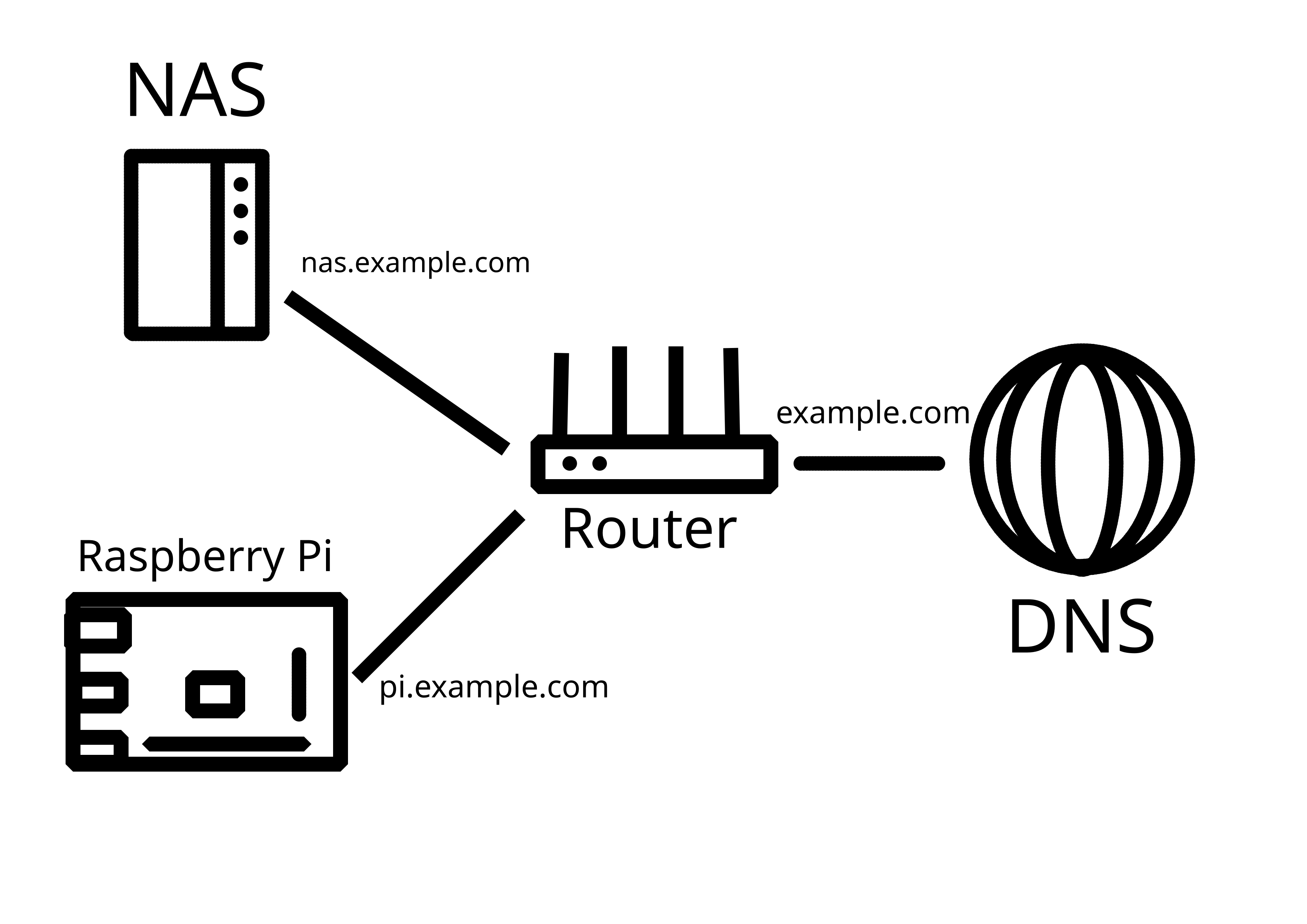
Let’s Encrypt is a certificate authority, the one making sure the green lock on HTTPS sites stays green.
Veracrypt is an encryption software.